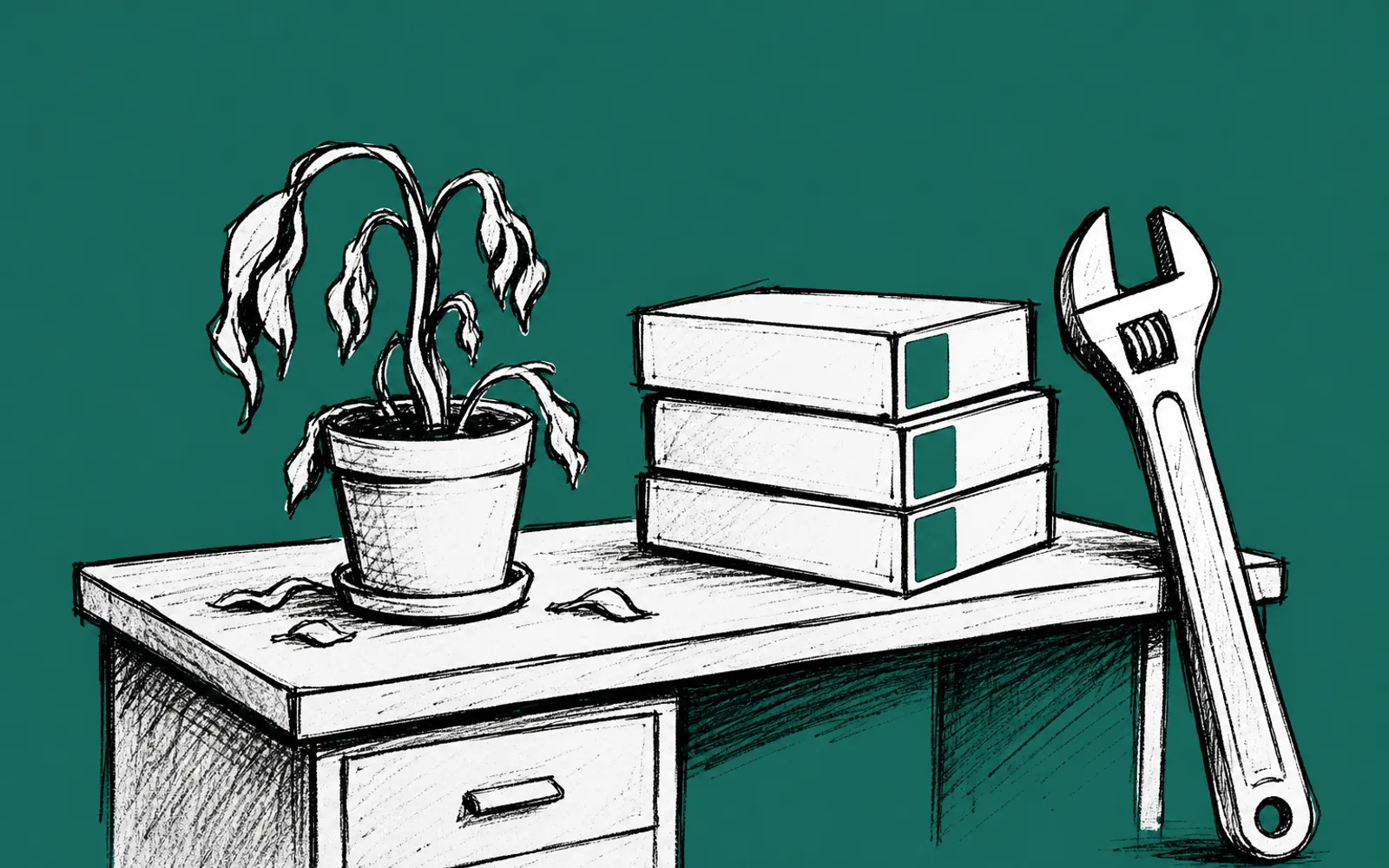
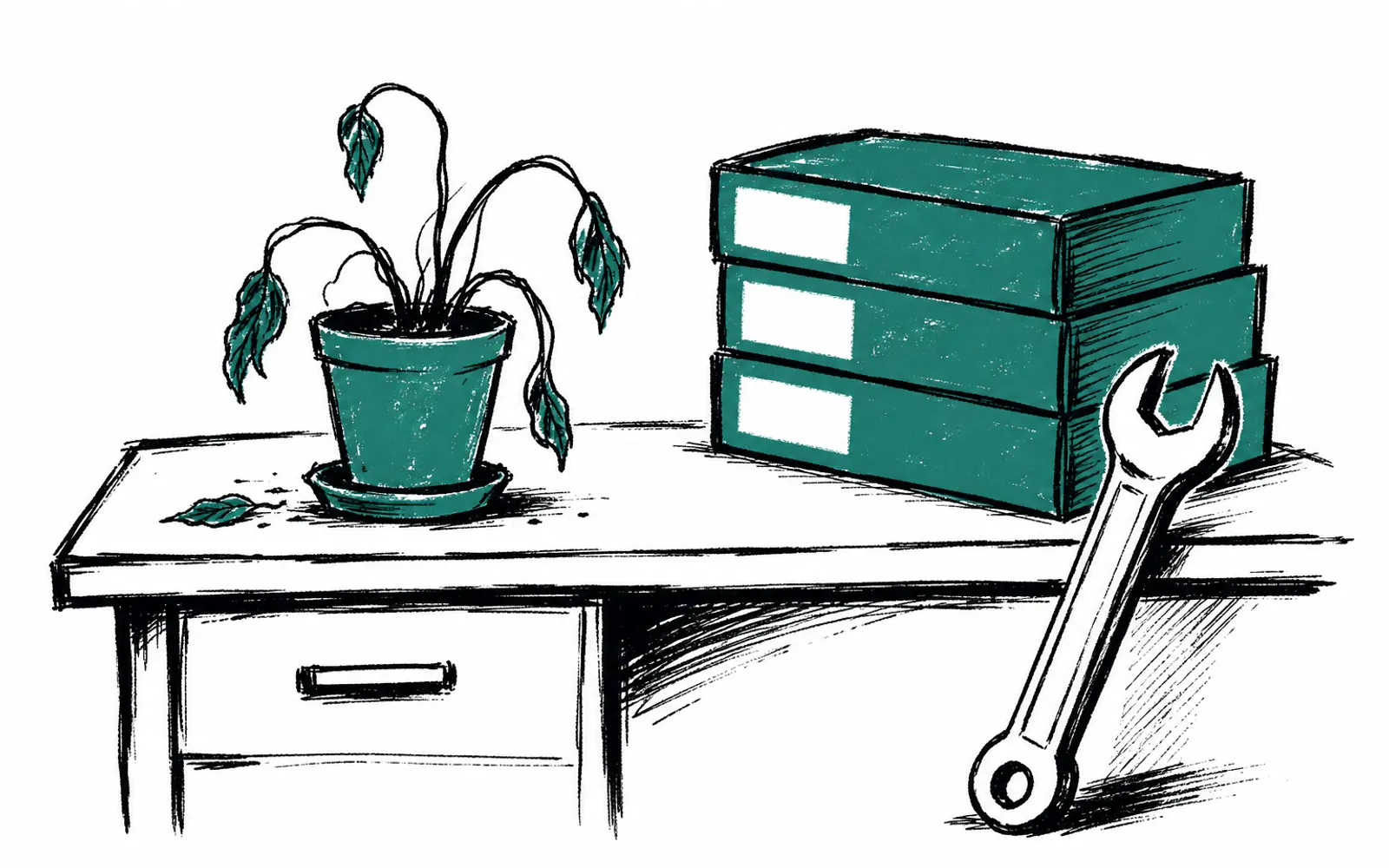
Why most small business AI pilots quietly die, and how to avoid it
The tool was fine. The setup around it was not. Here are the common failure points and the fix for each one.
- Pilots usually fail from setup mistakes, not from the technology
- A pilot needs one owner, one real task and a follow-up date to survive
- One-time training with no check-in is the most common cause of a dead pilot
- Restart small, pick one repeating task, and review it after a month
The scene is easy to recognize. Someone set up an AI tool six weeks ago. A few people logged in the first day, generated a paragraph or two, and never came back. The subscription is still billing. Nobody can say what the tool was supposed to do for the business in the first place.
Pilots rarely fail because of the technology. They fail because of a short list of predictable mistakes around it: no owner, no real task picked, one-time training with no follow-through, and no way to tell whether anything changed. Each one has a practical fix, and none of them requires special expertise.
Failure point one: no owner
Most pilots are assigned to nobody in particular. Somebody from operations heard about the tool, signed the team up, and moved on. When a question comes up, nobody knows whose call it is. The pilot drifts until the subscription renews and someone finally cancels it.
The fix is to name one person as the pilot's owner before the first login. It does not have to be the business owner, but the business owner has to back the person publicly. The owner of the pilot decides what gets tried first, answers questions from the team, and reports what changed. One name, said out loud in a meeting, is what separates a pilot from a cancelled subscription.
Failure point two: no real task was picked
A pilot that starts with "let's try AI" has already failed. Vague goals produce vague results, and vague results are easy to ignore. Teams open the tool, type something general, get a generic answer, and conclude the whole thing is overhyped.
The fix is to pick one repeating task before anyone logs in. Good candidates are work that happens weekly, follows the same shape each time, and has a clear finished result. Examples for a small business: drafting follow-up emails after quotes, writing routine job descriptions, summarizing meeting notes, or turning intake answers into a first draft. A specific task gives the team something to compare the AI output against, which is the only honest way to judge it.
Failure point three: one-time training with no follow-through
The most common pattern is a single enthusiastic session. Everyone practices, the room feels energized, and the trainer leaves. A week later the room is back to the old way of working. Skills that are shown once and never revisited do not stick.
The fix is to plan the follow-up before the first session ends. Put a review on the calendar for two to four weeks out. In that review, each person shows one thing they did with the tool on real work. Practicing on real tasks matters more than watching demos, and a scheduled check-in is what turns a good session into a habit.
Failure point four: no way to tell if anything changed
Many pilots are never judged at all. Nobody wrote down how long the task took before, so nobody can say whether the tool saved time. Without a number, the pilot is judged on mood, and mood in month two is usually worse than mood in week one.
The fix is to measure one thing before starting. If the task is follow-up emails, count how many minutes each one takes by hand. If it is meeting notes, time the write-up. The pilot's owner records the before number, runs the pilot for a month, and compares. Even a rough measure beats none. Honest reporting matters here too. If the tool did not help, say so and try a different task rather than pretending the first one worked.
The checklist before you restart
- 01Name the owner
One person owns the pilot and reports results, with the business owner's public backing.
- 02Pick one repeating task
Choose weekly work with the same shape each time and a clear finished result.
- 03Set safe-use ground rules
Write down what never goes into the AI tool and what always gets a human check.
- 04Record a before number
Time the task by hand once so the comparison is honest.
- 05Practice on real work
The team uses the tool on the actual task, not on generic examples.
- 06Schedule the check-in
Put a review on the calendar two to four weeks out, where each person shows one real result.
- 07Judge against the number
Compare the month to the before number and decide: keep, adjust, or stop.
The whole list can be run in an afternoon plus one month of ordinary work. No integration, no new hardware, no consultant. If a pilot still dies after this checklist, the usual remaining cause is that the picked task was the wrong one, which the month of measurement will show plainly enough to try a second task.
For owners who would rather have this structure handled for them, New York AI Lab sizes the same work in small, fixed increments: a free 25-minute fit call that looks at two tasks repeating in the owner's week, two 1-hour working calls a month on real tasks, and hands-on training sessions of 90 minutes and up. Its training also includes a follow-up check-in, the piece one-time sessions leave out.