How a New York property manager can answer tenant emails with AI without leaking personal information
A redaction-first workflow: strip the names, phone numbers and lease details out of a tenant email before you paste it into ChatGPT or Claude, then get a clean draft back in minutes.
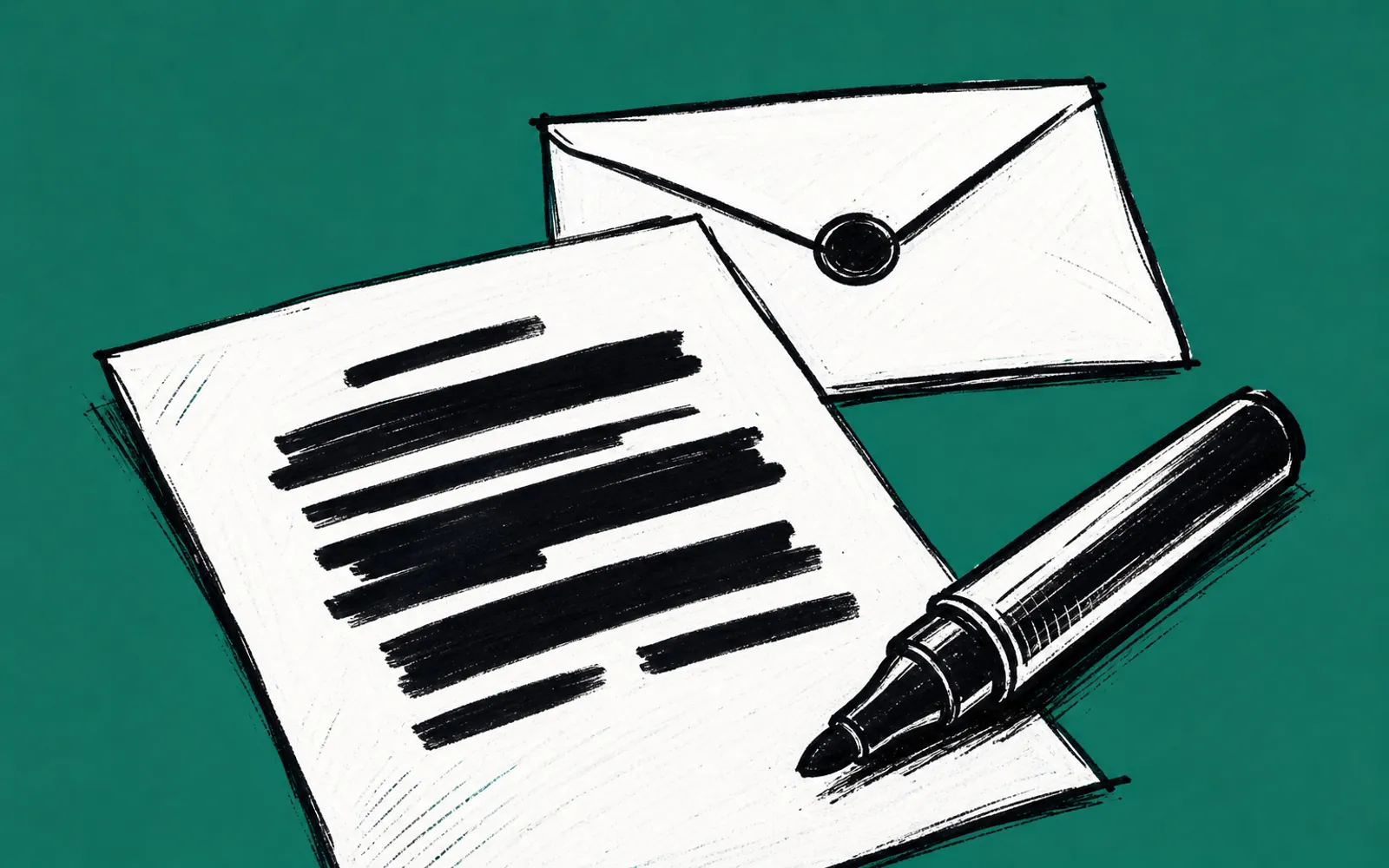

- Redact first, paste second: replace personal details with labels before any text reaches an AI tool
- Names, phone numbers, addresses, lease terms and account numbers are the core things to strip
- One AI subscription such as ChatGPT or Claude is usually all a manager needs
- New York State counts more than 7.7 million households, so the work this saves compounds fast
It is halfway through Monday morning. A property manager is answering the same tenant question for the fifth time, maybe a dispute over a lease renewal date or a request about a slow repair, and the draft is sitting in the inbox with a full name, unit number, phone number and lease terms in the text. The manager wants to paste it into ChatGPT or Claude and get a polished reply in thirty seconds, but hesitates, because the email is full of personal information that belongs to someone else. That hesitation is the right instinct, and a redaction-first workflow resolves it.
A redaction-first workflow means you strip every identifying detail out of the tenant's message and replace it with a neutral label before anything goes into the AI tool. You paste a version that says "Tenant A" and "Unit B" with dates and amounts reduced to types, get a clean draft back, then put the real details back in yourself before sending.
What the workflow does
The core move is substitution. Wherever the tenant's message contains a name, write "the tenant" or "Tenant A". Wherever it contains a unit or street address, write "the unit". Wherever it contains a phone number, email address, lease number or bank detail, delete it entirely, because the AI does not need it to draft a reply. Dollar amounts and dates usually do not identify anyone, so a rent figure or a repair request date can often stay. What must go is anything that lets a stranger connect the message to a real person or a real address.
Once the text is clean, the AI drafts the reply against the facts that remain: the category of question, the timing and the outcome the manager wants. The manager then reinserts the real name and unit in the final message. The AI never held the personal data, and the tenant receives a reply that reads like the manager wrote it, because the substance came from the manager.
Who it is for, and who it is not for
This is for small and mid-size property managers, the ones handling a steady stream of repetitive tenant questions with no large compliance department behind them. New York State had 7,722,646 households as of the Census Bureau's 2020-2024 count, and New York City alone had 3,334,088, which is a lot of tenants asking variations on the same lease, maintenance and payment questions. A manager answering twenty of those a week by hand is the ideal user.
It is not a substitute for legal review. If a tenant email involves an eviction, a discrimination complaint or a formal notice, the right next step is counsel, not a language model. The workflow is also not a records system: the authoritative copy of the lease and the correspondence stays wherever the manager already keeps it, and the AI is only a drafting aid.
How to run it
- 01Pick the email
Choose one repetitive tenant email, such as a lease renewal question or a maintenance follow-up.
- 02Strip the identifiers
Replace names with "the tenant", addresses with "the unit", and delete phone numbers, emails, lease numbers and account details.
- 03Add your goal
Write one line saying what you want the reply to accomplish, such as confirming a timeline for a repair.
- 04Paste and prompt
Paste the redacted text into ChatGPT or Claude with a prompt like: "Draft a polite reply to this tenant. Firm on policy, warm in tone, under 150 words."
- 05Edit the draft
Fix anything the AI got wrong about your policy, since it cannot know rules you did not state.
- 06Restore the details
Put the real name and unit back in yourself, then send from your normal inbox.
- 07Save the pattern
Keep the prompt that worked, so the next similar email takes one minute instead of ten.
Two example prompts
For a lease question, a workable prompt shape is one that asks the AI to confirm the end date on a fixed-term lease, restate the notice requirement and invite the tenant to discuss renewal options, in a reply under 150 words with no name or unit number included. For a maintenance question, a workable prompt shape is one that asks the AI to acknowledge a follow-up about a repair first reported some days ago, state that a contractor visit is being scheduled, and give no specific date that has not been confirmed. Write both in your own words, filling in the facts of the case after they have been redacted.
Both prompts share the same structure: the situation in neutral terms, the policy point the manager wants made, the tone, and the length. The manager supplies the facts, the AI supplies the wording, and nothing identifying ever leaves the inbox.
Where the line sits on personal information
The working rule is simple: if a detail would let a stranger find or contact the tenant, it comes out before the paste. That covers names, unit and street addresses, phone numbers, email addresses, lease numbers and any payment information. Amounts, dates and the general category of a problem usually stay, because they carry the meaning without identifying anyone. When in doubt, cut it, because the draft quality barely changes while the exposure disappears.
The scale of the work is worth noting. The Census Bureau counts New York State's median gross rent at $1,621 and New York City's at $1,821 for 2020-2024, and nearly half of the state's 8,738,856 housing units sit in rental housing concentrated downstate. Every one of those tenancies generates correspondence, and most of it repeats.
Training the habit across a team
A manager who wants the whole office answering mail this way can build the skill deliberately. New York AI Lab's AI Training for Business runs hands-on sessions on Zoom built on the team's approved real work, and a property management office can use its own tenant email examples as the practice material, with the same redaction rules applied before anything is typed. Sessions run 90 minutes and up, people leave with take-home routines and safe-use ground rules, and there is a follow-up check-in. Training is priced by a written quote, and the first step for any of the company's services is a free 25-minute fit call on Zoom.